BLOGGER TEMPLATES - TWITTER BACKGROUNDS »

Thursday, November 3, 2016

CUBS WIN!


Chicago Cubs
Won 2016 World Series against Cleveland Indians 4-3

So, if my publisher ever decides to issue a second edition of my book It Happened in Chicago, I will have to revise the chapter titled "No Curses in Baseball?" which details the 1945 incident that started the whole "curse of the goat" thing concerning the Cubs.

It's a fun story, and I will enjoy changing the ending if that becomes necessary!

Sunday, April 3, 2011

"A place with such a name could not be poor or mean."

Just taking a moment to share a wonderful quote about Chicago that appears in The Chicago History Journal today!

Monday, March 14, 2011

Not in the Book -- but Still a Chicago Curiosity!


I think this is the only entry that I included in my Chicago Curiosities manuscript, that was not included in the finished book. I don't know why, except that it was probably just a case of too many words/pages so something had to be cut.

Back when I was asking around for ideas of curiosities to include in the book, my cousin Phil suggested Lar Daly. Here's what I found out about Mr. Daly:

Lar Joseph Sarsfield Daly sought office for forty years but never won a race. He started by seeking the Democratic nomination to run for School Superintendent of Cook County in 1938.

Daly was a Republican primary candidate for Governor of Illinois in 1956 and 1964. An equal opportunity politician, he was a primary candidate for both the Democratic and Republican parties for Mayor of Chicago in 1959. He ran in the Republican primary in the 1963 and 1967 mayoral elections. His final campaign was against Senator Charles H. Percy in the 1978 Republican Senate primary.

For many of his campaigns, Daly -- a tall, white-haired man -- donned a red, white, and blue sash and an Uncle Sam hat. His platform stressed religion and morality, along with Chicago’s political and social problems.

Daly is best known today for using the Federal Communications Commission's "Equal Time Rule" to force radio and television news broadcasts to give him equal coverage with Chicago Mayor Richard J. Daley. He passed away in 1978 at the age of sixty-six.

The surname Daley (with an "e") is synonymous with Chicago politics. The name Daly, not so much. But I thought Lar Daly deserved at least a mention in connection with Chicago Curiosities!

Sunday, February 13, 2011

Chicago Curiosities - More Pictures You Won't See in the Book!

Sheffield's - exterior
I don't remember where or how I first heard of Reading Under the Influence (RUI), but I immediately knew I wanted to include it in Chicago Curiosities. 


RUI was developed by a group of Chicago writers in 2005. It meets weekly at Sheffield's Beer Garden and Backroom Barbecue Restaurant on North Sheffield Avenue. I was sorry that I wasn't able to time my visits to Chicago so that I could attend one of the meetings, but I did go to Sheffield's to get a feel for what it might be like. 


The group meets in the back room, surrounded by exposed brick and ductwork, next to a glowing fireplace. Each meeting has a theme (for example, Fighting Words, Dog Days, Cubbie Blues). 

As usual, I drew a HUGE crowd...
If you're scheduled to read your work, you order a shot, toast the audience, down the shot, read a short piece, then down another shot. (The shot doesn't have to be alcohol.) Readings are followed by trivia contests and drawings. 


When I visited (during the day), the place was empty, so I took a few pictures and had my husband take a couple photos of me at the "lectern." 


The best part is that you won't get a ticket or fine for "RUI" like you will for "DUI." Assuming, of course, that you don't DUI on the way home from RUI. 

And here I am, without a "shot"... at becoming famous...
You can read more about Reading Under the Influence on pages 91-92 of Chicago Curiosities.

Friday, January 21, 2011

Chicago Curiosities Book Trailer!

I wanted to create a video trailer for Chicago Curiosities that would give people
a sense of what it's about and why they might (or might not) want to read it.
I hope I succeeded! 
(And I hope it makes everybody want to read it!)


Thursday, January 13, 2011

Chicago Curiosities - More Pictures You Won't See in the Book!

Remember when you had to be good at math...
The minute I walked into Lincoln Square Bowling Alley I was catapulted back into the late 1960s. I was in high school. My two best friends and I wanted to study Russian, and the only way to do that was to have a special class with the teacher during his free period.

Unfortunately, we were scheduled to have P.E. -- which happened to be bowling -- during that period. The school graciously allowed us to attend the boys' bowling class. We formed one team to compete against the 2-person male teams. I think we were allowed to use our two highest scores or something like that.

The first game, I bowled a three. Yes. I knocked down three pins the entire game. My friend Nancy was using such a light-weight ball and throwing so daintily, she constantly needed to walk down the middle of the ball-return alley to retrieve her ball. We were amazing.

Honest Abe keeps watch over bowlers from on high.
Lincoln Square Bowling Alley reminded me of this because it still uses those old-time score sheets where you tally up everyone's score manually. Remember those? The place also has a decidedly retro look, thanks to the decor and lighting. And above the bank of neatly arranged pins there's a huge mural featuring Abraham Lincoln, gazing sternly upon the alleys as if warning bowlers not to try anything funny.

My entry about Lincoln Square Bowling Alley -- titled "A Trip Down Memory Lane(s) -- is on page 78-79 of Chicago Curiosities.

---------------------------------

Chicago Curiosities is now LIVE and available through the usual book-buying channels. The book is intended to be a fun read and also to act as a somewhat quirky guidebook to the wide range of peculiarities one can find in Chicago. In order to write the book and provide photos for it, I traveled all around Chicago on several different occasions (with my husband as driver and navigator). I took many, many pictures for each subject. I'm sharing a few of those in this blog.
Publisher: Globe Pequot; First edition (January 11, 2011). ISBN-10: 0762759844. ISBN-13: 978-0762759842

Saturday, January 8, 2011

Chicago Curiosities - Pictures You Won't See in the Book!

Chicago Curiosities is now LIVE and available through the usual book-buying channels. The book is intended to be a fun read and also to act as a somewhat quirky guidebook to the wide range of peculiarities one can find in Chicago.
Vicki Matranga, curator of the Culinary Curiosity exhibit,
shows me how to boil water.

In order to write the book and provide photos for it, I traveled all around Chicago on several different occasions (with my husband as driver and navigator). I took many, many pictures for each subject.

On page 49 there's an entry titled "Now We're Cookin'." It's about the Culinary Curiosity Exhibition at Kendall College. This exhibit features food-related tools from 19th and early 20th century America, 18th century Europe, and a few other cultures. You can read more about the exhibit at the link above. 


In the book, the entry is accompanied by my photo of a stove from the 1800s. Here on the blog, I'm sharing a few "out-takes" (photos that were not used). If you get a chance to visit this exhibit, I highly recommend that you do so. It's fascinating!


Tea for Two. . . or 12. . . or 20!
Before crock pots there were "fireless cookers"
that resembled wooden blanket chests. 


Sunday, October 31, 2010

Who Dat? Where Dat?


It's Halloween! 

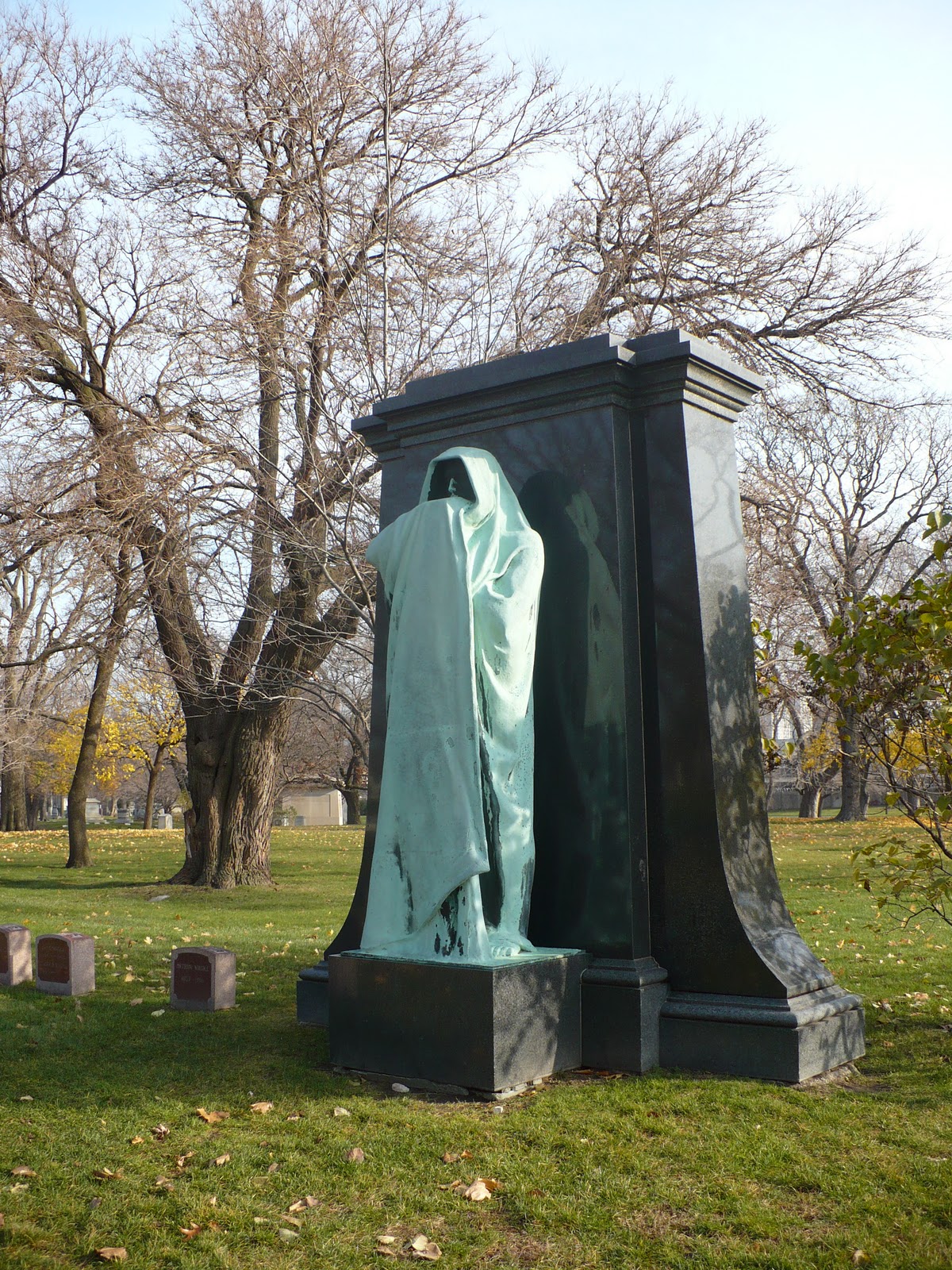
Here's an appropriate photo from my book Chicago Curiosities (Globe Pequot Press / January 2011). The first person to correctly identify what this is and exactly where it is will go on my list for a free copy of the book.

Saturday, October 2, 2010

Babe Ruth Calls His Shot

One of the first tasks I had to accomplish before receiving the contract to write It Happened in Chicago was to compile a list of events that I would include in the book, with a line or two about each explaining the importance or relevance.

My initial list had 100 events on it. The publisher wanted around 30 for the book. Among the many events I was not able to include was one that occurred on October 1, 1932. Here's a link to an excellent write-up on it from Chicagonow.com: Babe Ruth Calls His Shot.


Friday, September 24, 2010

Chicago Curiosities -- Page Proofs in Hand!


I am just now going through the page proofs for Chicago Curiosities (Globe Pequot Press / 2011). This is when a book starts to feel REAL. I'm seeing the pictures with the entries, and the page layouts just as they will appear in the final product.

It's "speak now or forever hold your peace" time for me, as the author. My last chance to catch errors or fix things that absolutely MUST be fixed. I have to refrain from recasting sentences and editing the manuscript unless it is absolutely necessary for some reason.

With this book, I'm feeling good about the writing for the most part, so that's a plus. I did come across two instances where the photo caption did not match the photo. The photo matched the entry topic, but I had given 2-3 options for pictures to the editor, and somewhere along the way, we crossed wires so that I sent the wrong pictures for the captions I provided in these two cases. (I suppose it's good that it's only two cases!)

Anyway, I do love this book and I hope other people will pick it up and enjoy it. It's sort of a guide book -- but not a typical guide book. Even the obvious, standard tourist sites are given a bit of a twist due to "curious" circumstances or conditions that surround them.


Thursday, September 9, 2010

Skating on the Edge... of the 94th floor!

Too bad my Chicago Curiosities book is already in its final stages before publication!

Ice rink planned on 94th floor of Hancock building

Wednesday, September 1, 2010

Name Your Pet after a Chicago City Street!

This is just for fun:

Name Your Pet after a Chicago City Street!


I love the list they came up with. I think Cermak the cat is my favorite. How about you?

Wednesday, July 7, 2010

Monadnock Building

I just came across an excellent article about The Monadnock Building, a Chicago landmark that earned an entry in my book Chicago Curiosities (Globe Pequot Press, 2011).

Tuesday, June 15, 2010

Meet Author Peter J. Spalding!

My guest today is Peter J. Spalding, author of the eBook 1871: A Novel of the Great Chicago Fire. Peter has done about every form of writing, including journalism, poetry, and commentary, for which his work was picked up by The New York Times.  He has also worked in various capacities on both stage and film, including two stage plays and six screenplays.  1871 is his first novel.

For more information about Peter J. Spalding and his book, visit http://peterjspalding.blogspot.com and http://www.smashwords.com/profile/view/peterjspalding.

Welcome to "It Happened in Chicago", Peter!
Q: In addition to writing books about Chicago, do you have any other ties to the city?

I live in California now, but I grew up in Illinois-- I was born in Park Ridge, actually. The one time we moved away was when my dad got a job in upstate New York.  It was my first real move, and I guess my mom was trying to make things easier on me, so she got me a picture book called "There'll Be A Hot Time in the Old Town Tonight" by Robert Quackenbush.  It was basically a kiddie version of the Chicago Fire-- it was completely inaccurate of course, but who cares.

I think she ended up ruing that day!  I was one of those kids who always wanted the same bedtime story every night, so I probably drove her crazy reading it over and over.  By the time we moved back to Illinois, I was hooked, and I've been obsessed with the fire ever since.

Q: When did you first realize that you wanted to be a writer?

That's like asking me when I realized I had brown hair-- I've known it as long as I can remember!  I actually started writing before I could read, because I used to tell stories to my mom, and she'd transcribe them.  As soon as I was old enough to read and write, I started doing it myself.  I wrote all kinds of short stories as a kid, and I wrote my first full-length play at the ripe old age of ten.  By the time I got to high school I was running the gamut, writing prose, poetry, drama-- you name it.

Q: Please describe one of your earliest works (go back as far as you can remember). Who or what inspired you to create it?

The earliest thing I know of was a thing my mom put in a scrapbook.  It was a retelling of "Little Red Riding Hood."  I must've been about two.  The way I told the story, she went through the forest and had all kinds of crazy adventures.  It was a little like "Alice in Wonderland."  The Big Bad Wolf was hardly in it; I guess I didn't think he was important.  So that was my two-year-old mind at work!

Q: Can you name someone whose encouragement made a significant difference as you developed into a writer?

Well, I come from a long line of writers, because every generation of my family has had at least a few.  My great-grandmother was a wonderful poet and a great storyteller, and I think she gave my grandmother a lot of her genes.  Both of my parents have written nonfiction-- in fact, my dad has a book coming out this summer about Lafayette.  So this stuff kind of runs in our veins, and needless to say, my folks have been great.

In school, I had three great teachers who stick out in my mind: Mrs. Ash in sixth grade, and Mrs. Rush and Mr. McCoy in high school.  But they're just the tip of the iceberg.  I've had so many great friends and mentors over the years, I can't possibly name them all.  I've learned something new every day, and I still do.

Q: What type of books do you read for pleasure?

I read anything that's smart and exciting.  My all-time favorite writer is Mark Twain, although Steinbeck and Fitzgerald are up there too.  But sometimes I shy away from so-called literary fiction, because it can get dull and pretentious.

My favorite books of the last few years have been "The Lovely Bones" by Alice Sebold and "The Time Traveler's Wife" by Audrey Niffenegger-- say what you want about their movie versions, but the books are great.  I also read a lot of nonfiction, especially history, which probably won't come as a surprise.

I love sci-fi and fantasy too.  I have a weakness for Marvel Comics, especially Spider-Man.  And I think J.K. Rowling is brilliant, but not just because she wrote a fun series and sold a lot of books.  She got a whole generation of kids to love reading, all over the world, even though conventional wisdom said young people don't read books anymore.  I defy anybody to name another writer in the last hundred years, who has inspired so many millions upon millions of people.

Q: What was one of the easiest things about writing 1871: A Novel of the Great Chicago Fire? What was one of the most difficult?

The easy part was telling a story that I cared so much about, and that was really personal to me.  I hope that doesn't sound like a BS answer, because I really do mean it.  Very often, it's hard to pinpoint what your story is really about; and if you're not careful, if you're not personally invested in it, then it can come across as dull or cliched.  That's one of the biggest pitfalls for any writer, myself included, but on this book it was never a problem.

I felt like I'd had this story in my head for years, and I just needed enough writing skill and experience to be able to do it justice.  I drew from my own life too-- I've never lived through a huge disaster, thank God, but a lot of the characters' conflicts and feelings were based on things I'd gone through myself.  So, for better or worse, this is a story that comes straight from my heart.

The hard part was working out all the technical stuff.  Some of it was pretty routine, like setting up the story and making sure all the details are consistent, because the book does have a lot of subplots.  But to be honest, I made it harder for myself than it needed to be.

I swore I'd make the story 100% historically accurate.  Even though it's fiction, I wanted to make sure the story could've happened in real life.  That's a lot easier said than done.  It forces you to do a huge amount of research, so I can't tell you how many months I spent in libraries and archives, just digging through microfilms and yellowed books and whatnot.  And a lot of the time, eyewitnesses gave different stories, or one piece of evidence contradicted another, so I couldn't say for sure what had happened-- I had to make my own judgment calls about what I thought was most likely.

Then came the hardest part of all: I had to to tell a compelling story, and get readers to really care about the characters, while staying within those limitations.  Sane writers don't do that.  The real world doesn't follow nice conventions like three-act structures, so most writers will use artistic license to change whatever they want.  I'm all for that, because it obviously worked for Dickens and Tolstoy and who-knows-who-else.  But on this book, I was bound and determined to do it my way.

I think it worked out in the end, because I do think historical accuracy helped the story, but it still gave me a lot of gray hair.  Oh well-- such is life.

Q: Of the characters mentioned in 1871: A Novel of the Great Chicago Fire, please tell us about one you would like to meet and why.

Does Abraham Lincoln count?  He's only in a couple of flashbacks, but I'd love to meet him! I'm only half kidding, actually.  That's why I wrote about the Lincolns: they're just fascinating people, and I wanted to get to know them better.

The more I found out about them, especially at that stage in their lives, the more they seemed downright Shakespearean.  Robert was so much like Hamlet: he was grappling with the legacy of a dead heroic father, and he was struggling to find his own place in the world.  And Mary was kind of like Lady Macbeth, with her ambition and whatnot, although she obviously never plotted a murder.  Their stories were so packed with drama that as a writer, I couldn't resist.

Q: Can you share with us anything about the fire that you feel most people don't know?

Well, that ties right into the last question, because most people don't know that the Lincoln family lived through this.  Most books don't even mention it, and if they do, it's just in passing.  I was floored when I found out about their story-- I couldn't believe that nobody had written about it before.  So I was pretty excited to be the first (as far as I know).  Obviously, since I was doing fiction, I did have to invent some details when the historical facts were unclear.  But the Lincolns' basic storyline is real.

In a broader sense, though, I don't think people realize how heartbreaking the fire was.  The city's boosters tried to gloss over that stuff because they didn't want to scare off investors.  But the truth is, it really was hard on people who lived through it.  For example, the whole North Side was wiped out-- it was like the Lower Ninth Ward during Katrina-- so if you lived in that part of town, you would've almost certainly lost your home.  You have to think of that in human terms, because statistics don't do it justice.  That's why eyewitness accounts are so important: they make you realize how crushed the survivors really were, and how profoundly their lives were changed.  And not everybody made it.  For example, Gurdon Saltonstall Hubbard was one of Chicago's founding fathers, but he lost practically everything and never recovered.  So it really did take a lot of heroism and fortitude; and when I wrote the book, I wanted to honor that spirit.

Q: What led you to decide that the novel should be published as an eBook?

It was a combination of things, but the short answer is, I think eBooks are the way of the future.  They're still kind of a niche market, but they won't stay that way for long, considering that iPads and Kindles are selling like hotcakes.

I do have to say, I think paper books are great, and they're never going away.  I love curling up on the couch or sitting on a park bench or what have you.  But you do have to stay up to speed with the times, and frankly I think the publishing industry is still stuck in the twentieth century.  Most books don't sell enough copies to cover the author's advance, but publishers pay those advances anyway.  And if retailers can't sell enough copies, the publishers buy them back.  That makes it almost impossible for them to make money.  They have a really hard time adjusting to change, which in this day and age is a serious problem.

I'm not a doomsayer, by any means, but I do think publishers need to adapt, and the quicker the better.  It's kind of like what happened in the fifties, when movie studios had to deal with the advent of television.  It was painful in a lot of ways; they had to completely rethink the way they did business, and some companies got through it better than others.  But movies eventually found their place alongside TV, and nowadays they coexist pretty well.  I think the same thing will happen in the publishing world, where paper books will find their place among eBooks and other new media.  But it may take a while, and the old rules of the game won't necessarily apply.

Anyway, I knew eBooks were a growing market, and I wanted to get in on the ground floor.  A lot of other writers have done the same thing; Stephen King published "Riding the Bullet" as an eBook years ago.  I think it's going to become more and more mainstream as time goes on.

After all, we've all gotten used to downloading music and reading newspapers online.  So why not download a book?

Q: What would you like us to know about your current work/s in progress?

I'm working on a book about an old movie theater, which by the way is another passion of mine.  And I'd love to write more about the westward movement, especially the California Gold Rush, and about the space program.  I have a couple of ideas for those, but I'm still in the early stages of writing.

I'm also working on a few stage plays and screenplays.  Some of them grew directly out of "1871," because I learned so much about Chicago history that I found more stories that I wanted to tell!  I want to do a movie about the Leopold and Loeb murder, among other things, but that's a tough sell in Hollywood.  So you'll have to wish me luck.

Q: Anything else you'd like to share?

People always ask me how much of the book is fictional, and how much of it is real.  I usually dodge that question, because I want people to enjoy the novel as is, without worrying about the behind-the-scenes stuff.  And if I've done my job, they won't be able to tell the difference between fact and fiction.

Even so, if you want to learn more, I do encourage people to read up on the fire.  I think it's an amazing piece of history, and there was only so much that could fit into the book.  There are a lot of great resources out there.  I posted some links and recommendations on my blog, and there's more where they came from.  So by all means, check it out!

Sunday, June 6, 2010

Vivian Harsh (1890–1960)

Described as “the historian who never wrote,” Vivian Gordon Harsh devoted her life to building one of the most important research collections on African-American history and literature in the country.
Read an article about this fascinating, talented woman at http://chicagotribute.org/Markers/Harsh.htm.

She was the first black librarian in the Chicago Public Library system.

Saturday, May 29, 2010

Further updates on Chicago Curiosities

The Chicago Curiosities manuscript is now with an editor who specializes in putting together books in the Globe Pequot Press "Curiosities" series. I should be seeing copyedits before too long, along with any questions or concerns about my photos.

To date, I have not experienced any particular traumas related to a copyeditor's notes or queries. With my nonfiction books, I am typically asked to clarify things, confirm information that is questioned by the copyeditor, or explain/correct apparent inconsistencies.

Having worked as a copyeditor myself, I almost always understand where the copyeditor is coming from and have no problem going along with changes.

Wednesday, May 19, 2010

Cubs Heaven?

The Chicago Curiosities manuscript is with my editor, who is making some decisions about Sidebars and Trivia items (as in, do I need more of either?)

She asked if I could write a Sidebar for the chapter on the Northwest section, so I went looking for something and found a really good one (so good, I wish I had known about it earlier, so I could take a picture and write a full entry).

Check it out at Beyond the Vines and Your Funeral Guy.

I understand that the Chicago location is the first of what will be many very special "skyboxes" for sports fans. Amazing.

Monday, April 19, 2010

Update on Chicago Curiosities

Ah... the plot thickens! Or, rather, the manuscript thickens. I'm talking about Chicago Curiosities, scheduled for publication by The Globe Pequot Press in December.


I am headed down the home stretch -- a darn good thing considering that the FINAL deadline for the manuscript and photos is June 1! Here's what I still need to do:

  • Write and select photos for 7-8 more entries ranging in length from 100 to 400 words.
  • Write an introduction, acknowledgments, and author bio.
  • Write 5-6 regional section "openers" at 250-300 words each.
  • Find an "overview" map of Chicago.
  • Pinpoint the locations of about 100 "curiosities" on regional maps.
  • Develop the final photo list with ID numbers, captions, etc.
  • Do a final word count on the entire manuscript to make sure I'm at 30,000-35,000 words.
I've been working on this project since August, 2009. I've made four trips to Chicago to take pictures. 


And now, as I said, I'm headed down the home stretch. Onward and upward!

Friday, April 9, 2010

Sign of the times?


(seen in Chicago near Dearborn Street Station)

It's good to know Michelle and Barack have a back-up plan in case this Presidency thing doesn't work out...

Monday, April 5, 2010

Chicago Curiosities Continues!


I'm still in the midst of taking photographs and writing entries for my book Chicago Curiosities (Globe Pequot Press / December 2010). Took a quick trip up to the Windy City yesterday and came across this unusual sculpture.

It did not seem to have a sign or plaque explaining what it is or who created it. I am embarrassed to say I don't know the exact location, except that I came across it not far from Union Station.

If you can tell me and I can verify what you say, I will send you a copy of my book It Happened in Chicago!